
Upper Blepharoplasty
in Torrance, CA
Upper eyelid surgery (upper blepharoplasty) at Adonis Plastic Surgery in Torrance removes carefully selected redundant upper-eyelid skin and, when appropriate, conservatively addresses fat that contributes to fullness. The goal is to reveal the natural eye and crease without over-resection, hollowing, or treating brow descent and true eyelid ptosis as though they were simply extra skin.[1]

What Upper Eyelid Surgery Treats.
The technical term for redundant upper-eyelid skin is dermatochalasis. As skin loses elasticity, it can fold over the natural crease, create lateral hooding, make the eyes appear tired or smaller, interfere with makeup, and in more advanced cases contribute to upper-field visual obstruction.
Upper blepharoplasty removes a measured amount of that skin through an incision designed to sit in the natural eyelid crease. When upper-lid fat contributes to puffiness, selected fat can also be conservatively repositioned or reduced.
Adonis performs upper eyelid surgery at our Torrance surgical facility for patients throughout Redondo Beach, Palos Verdes, Manhattan Beach, El Segundo, Long Beach, San Pedro, and the greater South Bay and Los Angeles area.
Patients are often surprised by how manageable upper blepharoplasty feels.
Because the treatment area is small and the incision follows an existing eyelid crease, upper blepharoplasty is a very different recovery from a large facial operation. Swelling and bruising are expected, and many patients look increasingly presentable over roughly 10 to 14 days. The visible change can still be meaningful while preserving a natural expression.
A small, carefully planned incision
The incision is designed within the natural upper-eyelid crease so it becomes increasingly difficult to notice as healing progresses.
Social recovery is usually measured in days
Some patients return to desk work sooner, but visible swelling or discoloration can remain noticeable for roughly 10 to 14 days and sometimes longer.
The best result does not announce surgery
A natural upper blepharoplasty should make you look more rested and open-eyed while preserving the character, expression, and basic shape of your eyes.
Who tends to benefit most from upper eyelid surgery?
Age alone does not determine candidacy. Health, smoking status, eye conditions, healing risk, goals, brow position, eyelid margin position, and the source of the apparent droop matter more than a specific age cutoff.[2]
Excess skin over the eyelid crease
The upper-lid fold has become heavy enough to hide the crease, rest near the lashes, interfere with makeup, or create an aged or tired appearance.
Healthy eyes and realistic goals
Your surgeon reviews dry-eye symptoms, previous eye surgery, medications, smoking, healing risks, and other eye or medical conditions before recommending elective eyelid surgery.
You want to look refreshed, not different
Conservative upper blepharoplasty works best when the goal is to restore visible eyelid definition without aggressively hollowing the upper lid or changing eye identity.
Not every “droopy eyelid” is caused by excess eyelid skin.
Upper blepharoplasty treats excess eyelid skin and selected fat. True eyelid ptosis is different: the eyelid margin itself sits too low because the eyelid-lifting mechanism is not functioning normally. Removing skin alone does not correct true ptosis.[2]
A low eyebrow can also contribute to apparent eyelid heaviness. Brow position should be evaluated with the eyelid because upper-eyelid surgery can interact with brow position and the final upper-face balance.[7] Read our brow lift vs. upper blepharoplasty guide.
The evaluation should identify what is actually low: the skin, the eyelid margin, the brow, or a combination. That distinction determines the operation.
Upper blepharoplasty is not the same as lower or double-eyelid surgery.
“Eyelid surgery” is a broad phrase. Different procedures treat different anatomy and should not be blended together simply because they involve the eye area.
Upper blepharoplasty
Removes selected excess upper-eyelid skin and addresses appropriate fat to restore a cleaner, more visible upper-lid contour.
Lower blepharoplasty
Treats under-eye bags, protruding lower-lid fat, selected skin excess, and related lower-eyelid concerns. Explore lower eyelid surgery.
Double eyelid / Asian blepharoplasty
Creates or defines an upper-eyelid crease and has different anatomical and aesthetic goals. See our double eyelid surgery page.
For a broader comparison, read our guide to choosing the right blepharoplasty procedure.
How upper blepharoplasty is planned and performed.
The surgeon first evaluates how much skin can be safely removed while preserving normal eyelid closure and a natural crease. Incisions are commonly placed in the upper-eyelid fold, with the amount of skin and fat treatment individualized to the anatomy.[3]
Excess skin is removed conservatively. If fat contributes to fullness, selected fat can be sculpted or repositioned rather than automatically removed. The incision is then closed precisely within the crease. The exact anesthesia plan depends on the patient and surgical plan.
Eyelid, brow, and eye evaluation
Your surgeon examines skin excess, crease position, brow height, eyelid margin position, fat distribution, symmetry, dry-eye history, previous procedures, and your desired degree of change.
Precise crease marking
The incision and amount of skin removal are planned while protecting enough tissue for comfortable eyelid closure and a natural upper-lid shape.
Conservative skin and fat refinement
The planned skin is removed, and fat is addressed only when it contributes to the contour. Avoiding unnecessary hollowing is part of preserving a natural result.
Fine closure and recovery
The incision is closed along the crease. You leave with instructions for cold compresses, eye and incision care, activity restrictions, and scheduled postoperative follow-up.
If you keep looking in the mirror and lifting the upper-lid skin with your finger to see a cleaner crease, a surgeon can determine whether the issue is eyelid skin, brow position, true ptosis, or a combination.
REQUEST MY CONSULTATIONUpper blepharoplasty before and after.
The most convincing upper-eyelid results are often subtle at first glance. Look for a cleaner visible crease, less hooding, improved symmetry, preservation of the patient's original eye shape, and an expression that looks rested rather than surgically altered.
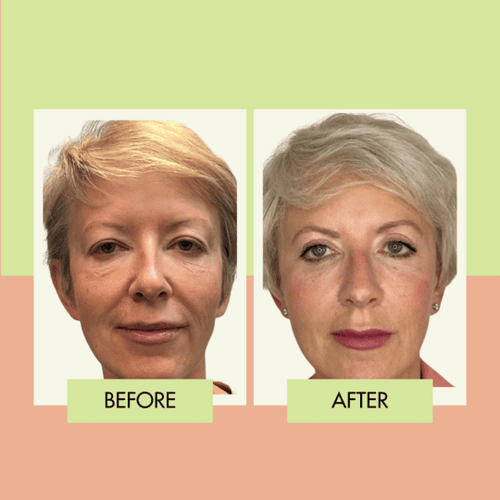
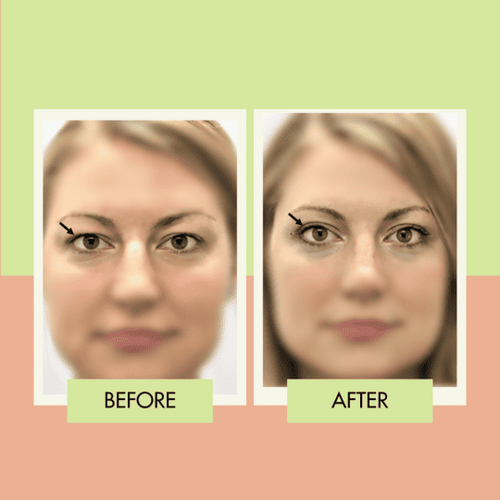
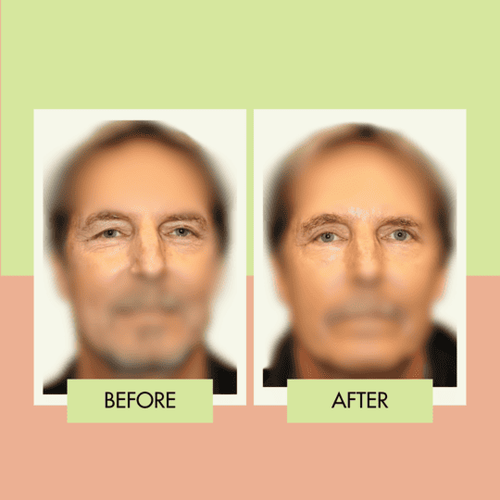
Individual results vary. Photos are shared with patient consent. Brow position, skin excess, eyelid anatomy, fat distribution, asymmetry, healing, and scar maturation influence the final result.
The goal is to reveal your eyes, not redesign them.
An overdone upper blepharoplasty can look hollow, tight, or simply unfamiliar. A natural result depends on conservative tissue removal and understanding how the eyelid relates to the eyebrow, orbital fat, crease, and underlying eye shape.
That means not treating every bit of upper-lid fullness as something that should disappear. Fat can contribute to youthful softness, and enough skin must remain for comfortable closure. The operation should remove the excess that is hiding the eye without stripping away the anatomy that makes the eye look like yours.
The result we want people to notice is that you look rested, brighter, and more open-eyed. They should not have to know why.
Upper Blepharoplasty Recovery: What to Expect.
Swelling, bruising, irritation, temporary dryness, and incision redness can occur during early healing. Recovery is highly visible because it is around the eyes, and the appearance can lag behind how physically comfortable the patient feels.[4]
Swelling is most noticeable
Cold compresses, prescribed eye or incision care, rest, and temporary activity limits are common early instructions. Follow your surgeon’s specific guidance for positioning, bending, exercise, and other activities.
The change becomes easier to see
Swelling and bruising begin improving. Sutures, when non-dissolving sutures are used, may be removed around this stage according to your surgeon's protocol.
Most patients look increasingly presentable
Many patients resume desk work before all visible healing is complete. By roughly 10 to 14 days, bruising and swelling are often substantially less noticeable, although individual recovery varies.
The crease and scar keep refining
The incision continues softening and fading while the eyelid settles into a more natural contour. Scar maturation continues well beyond the return to normal life.
For a more detailed timeline, read our day-by-day upper blepharoplasty recovery guide. If scar visibility is one of your main concerns, see our upper eyelid scar guide.
Can upper eyelid surgery improve vision or qualify for insurance?
Sometimes. When redundant upper-eyelid skin meaningfully obstructs the superior or peripheral visual field, upper blepharoplasty may be evaluated as a functional rather than purely cosmetic procedure. Insurance coverage, when available, depends on the patient's individual policy and medical-necessity criteria.
Cosmetic upper blepharoplasty
Performed primarily to improve hooding, tired appearance, visible crease definition, or other aesthetic concerns. Cosmetic surgery is generally self-pay.
Functional eyelid concerns
When excess skin interferes with vision or daily activities, documentation may include clinical examination, external photographs, and formal visual-field testing.
Coverage is plan-specific
Medical necessity and authorization requirements differ among health plans. A patient's symptoms or surgeon recommendation do not automatically guarantee insurance coverage.
For more detail, read our upper blepharoplasty cost and insurance guide.
Upper blepharoplasty turns back a change. It does not stop aging.
The skin removed during surgery does not grow back, and results can remain meaningful for many years. The brow, forehead, eyelid skin, and surrounding face will continue to age, however, so the eye area can gradually change again over time.
The removed skin stays removed
The improvement from removing redundant skin is durable, although remaining skin continues to age normally.
Brow position can change later
Future eyebrow descent can recreate heaviness around the upper eye even when the original eyelid surgery remains intact.
Protect the thin eyelid skin
Sun protection, avoiding smoking, and following appropriate skin-care guidance help protect the quality of the delicate tissue around the eyes.
Upper eyelid surgery with follow-up connected to the surgical plan.
Adonis Plastic Surgery is a QUAD A-accredited outpatient surgical facility at 2557 Pacific Coast Highway, Torrance, CA 90505. Consultation, operative planning, surgery-day care, and postoperative follow-up are coordinated through the Torrance practice.
We serve patients throughout Torrance, Redondo Beach, Palos Verdes, Rolling Hills Estates, Lomita, Harbor City, San Pedro, Gardena, Carson, Manhattan Beach, El Segundo, Long Beach, and the greater South Bay. Because bruising and swelling are visible around the eyes, social timing, work obligations, driving, eye dryness, and postoperative checks should be part of the plan before surgery day.
Upper blepharoplasty cost in Torrance and Los Angeles.
Pricing depends on the surgical plan, anesthesia, whether fat refinement or another eyelid procedure is needed, and whether upper blepharoplasty is combined with lower eyelid or broader facial surgery. Your final quote is based on the procedure actually recommended for your anatomy.
Upper Eyelid Surgery at Adonis
$3,500 – $6,000This is the published Adonis planning range for upper blepharoplasty. Your final itemized quote depends on the surgical plan, anesthesia, facility requirements, complexity, and whether another procedure is performed at the same time.
Financing available
Qualified patients may use available payment-plan options for eligible cosmetic surgical costs. Approval, interest, eligibility, and repayment terms are determined by the financing provider.
VIEW PAYMENT PLANSWhen comparing upper blepharoplasty quotes, confirm whether the price includes the surgeon, anesthesia, facility, postoperative care, and any additional procedure. Also confirm that you are comparing ordinary upper blepharoplasty with the same operation rather than ptosis repair, brow surgery, or double-eyelid surgery.
Common questions about upper eyelid surgery.
What is upper blepharoplasty?
Upper blepharoplasty is eyelid surgery that removes carefully selected excess upper-eyelid skin and may conservatively address upper-lid fat. It is used to reduce hooding and heaviness and restore a cleaner, more visible eyelid contour.
Which surgeons perform upper blepharoplasty at Adonis?
Upper-eyelid rejuvenation at Adonis is performed by board-certified plastic surgeons Dr. Shana S. Kalaria and Dr. Joshua Y. Jacobson. Dr. Kalaria medically reviewed this page.
What does upper eyelid surgery treat?
It can treat redundant or hooded upper-eyelid skin, loss of visible crease definition, selected upper-lid puffiness, and in some functional cases skin that contributes to visual-field obstruction.
Will upper blepharoplasty change the shape of my eyes?
Ordinary upper blepharoplasty is generally intended to reveal the existing eye rather than redesign it. Conservative planning aims to preserve eye identity, normal eyelid closure, and natural upper-lid fullness while removing the tissue responsible for hooding.
Will I look surprised or overdone after upper eyelid surgery?
That is not the goal. An over-resected eyelid can look hollow or tight. Natural results depend on conservative skin and fat management and correct assessment of the brow and true eyelid position before surgery.
What is dermatochalasis?
Dermatochalasis is the medical term for loose, redundant eyelid skin. In the upper lids it can create hooding, cover the natural crease, and in more advanced cases interfere with peripheral or superior vision.
Is upper blepharoplasty the same as ptosis surgery?
No. Upper blepharoplasty treats excess skin and selected fat. Ptosis surgery addresses an eyelid margin that sits too low because of a problem with the eyelid-lifting mechanism. Some patients have both conditions and require separate or combined treatment.
How do I know if I need upper blepharoplasty or a brow lift?
If excess eyelid skin is the main source of hooding, blepharoplasty may be appropriate. If eyebrow descent is pushing tissue downward, brow treatment may be more important. Some patients have both. Your surgeon evaluates brow position and eyelid skin together.
Is upper blepharoplasty the same as double eyelid surgery?
No. Double eyelid or Asian blepharoplasty is designed to create or define an upper-eyelid crease and has distinct anatomical and aesthetic goals. Standard upper blepharoplasty primarily treats redundant skin and selected fat.
How long does upper blepharoplasty take?
Many upper-eyelid procedures take approximately one to two hours. The exact time depends on anatomy, whether both upper lids are being treated, fat refinement, anesthesia, and whether another procedure is performed at the same time.
What anesthesia is used for upper eyelid surgery?
The anesthesia plan is individualized. Upper blepharoplasty may be performed with local anesthesia and sedation or another anesthesia approach depending on the patient, surgeon, facility, and any procedures being combined.
Is upper blepharoplasty painful?
Patients can experience tightness, irritation, soreness, dryness, swelling, or bruising during early healing. Many people find the physical recovery more manageable than they expected, but individual discomfort and medication needs vary.
How long is upper blepharoplasty recovery?
Many patients feel comfortable returning to work or social settings around seven to ten days, although visible swelling or discoloration can persist longer. The incision and subtle eyelid swelling continue refining for weeks to months.
When are upper blepharoplasty stitches removed?
If non-dissolving sutures are used, removal commonly occurs during early follow-up, often around the first week. Exact timing depends on the closure technique and your surgeon's instructions.
Will upper blepharoplasty leave a visible scar?
The incision is generally placed within the natural upper-eyelid crease so it is well concealed when the eyes are open. Early redness is expected, and the scar continues softening and fading over several months.
Can men get upper blepharoplasty?
Yes. Male patients commonly undergo upper eyelid surgery. The same principles apply, but crease height, brow position, eyelid fullness, and the degree of skin removal should be planned to preserve the patient's natural masculine anatomy and expression.
Can upper blepharoplasty improve vision?
It can when redundant upper-eyelid skin is severe enough to obstruct the superior or peripheral visual field. Functional cases require appropriate examination and may involve formal visual-field testing and photographic documentation.
Does insurance cover upper blepharoplasty?
Cosmetic upper blepharoplasty is generally self-pay. Some health plans may consider coverage when eyelid skin causes documented functional visual obstruction and the plan's medical-necessity requirements are met. Coverage is policy-specific and cannot be guaranteed.
Can upper and lower blepharoplasty be done together?
Yes, when appropriate. Upper eyelid surgery can be combined with lower blepharoplasty if the patient also has persistent lower-lid bags, fat protrusion, or other lower-eyelid concerns. The combined recovery and surgical plan are individualized.
How long do upper blepharoplasty results last?
Results can remain meaningful for many years because the removed skin does not return. The eyelids, brow, forehead, and surrounding face continue to age, however, so gradual changes can occur over time.
What are the risks of upper eyelid surgery?
Potential risks include bleeding, infection, dry or irritated eyes, asymmetry, unfavorable scarring, overcorrection or undercorrection, difficulty closing the eyes, sensation changes, eyelid-position problems, anesthesia complications, revision surgery, and rare serious visual complications. Your surgeon reviews the risks specific to your anatomy and health before surgery.[5]
How much does upper blepharoplasty cost in Torrance or Los Angeles?
Adonis publishes a $3,500 to $6,000 planning range for upper eyelid surgery. Final pricing depends on the surgical plan, anesthesia, facility requirements, complexity, and whether additional eyelid or facial procedures are performed.
Do you see upper blepharoplasty patients from outside Torrance?
Yes. Adonis Plastic Surgery is in Torrance and serves patients from Redondo Beach, Palos Verdes, Manhattan Beach, El Segundo, Long Beach, San Pedro, Gardena, Carson, Lomita, and throughout the South Bay and Greater Los Angeles.
Clinical information reviewed against independent medical sources.
This page was medically reviewed by Shana S. Kalaria, MD, MBA, an American Board of Plastic Surgery-certified plastic surgeon, on September 11, 2026. These references support general educational information about candidacy, technique, recovery, risk, brow position, and expected outcomes. They do not replace individualized medical advice.
American Society of Plastic Surgeons
American Society of Plastic Surgeons
American Society of Plastic Surgeons
American Society of Plastic Surgeons
American Society of Plastic Surgeons
PubMed / U.S. National Library of Medicine
PubMed / U.S. National Library of Medicine
PubMed / U.S. National Library of Medicine
Joshua Y. Jacobson, MD · ASPS profile
Look more rested without looking like someone else.
Meet with one of our board-certified plastic surgeons to review your eyelid skin, crease, brow position, eyelid margin, fat distribution, symmetry, eye history, recovery, and the degree of change you want. The recommendation should clarify whether upper blepharoplasty is appropriate, whether brow descent or ptosis changes the plan, and how to preserve a natural result.