
Double Eyelid Surgery in Torrance
(Asian Blepharoplasty)
Double eyelid surgery creates or defines a visible supratarsal crease while preserving the eye shape and facial identity that already belong to you. The most natural result is not simply the highest or deepest crease. It is a crease whose height, shape, fixation, and movement fit the patient’s eyelid anatomy and goals.[1]

What double eyelid surgery actually changes.
A double eyelid is an upper eyelid with a visible supratarsal crease.[2] Some people naturally have no visible crease, often called a monolid, while others have a low, faint, partial, multiple, or asymmetric crease. Double eyelid surgery creates or strengthens the connection that allows the upper-lid skin to fold as the eye opens.
This is different from standard upper blepharoplasty, which primarily removes redundant aging skin. Asian blepharoplasty is fundamentally about crease design and eyelid architecture, although excess skin or fat can also be addressed when it is part of the patient's anatomy.
Adonis performs double eyelid surgery at our Torrance surgical facility for patients throughout Redondo Beach, Palos Verdes, Manhattan Beach, El Segundo, Long Beach, San Pedro, Gardena, Carson, and the greater South Bay and Los Angeles area.
The goal is crease definition, not a different identity.
There is enormous variation in naturally occurring Asian eyelids. Some people have no visible fold, some have low tapered creases, some have parallel creases, and others have asymmetric or multiple folds. There is no single “correct” Asian eyelid.
That is why the best plan begins with your own anatomy and the appearance you want. Crease height, shape, depth, the epicanthal fold, upper-lid fullness, brow position, and the way the eyelid moves all influence what will look natural on your face.
A good result should look as though the crease belongs to you. It should not look pasted onto the eyelid, unnecessarily high, overly deep, or disconnected from the rest of your features.
Who tends to be a good candidate for Asian blepharoplasty?
Double eyelid surgery is elective. Candidacy depends on eyelid anatomy, eye and ocular-surface health, crease goals, symmetry, skin and fat distribution, ptosis assessment, medical history, and whether the requested crease can be created safely and naturally.
You want a visible or more defined crease
You have no visible fold, a very low fold, multiple folds, or a crease that disappears and want more consistent upper-eyelid definition.
You want better crease symmetry
One eyelid has a different fold from the other, and you understand that surgery can improve symmetry without making two naturally different eyes mathematically identical.
Your goals match your anatomy
You are open to choosing crease height and technique based on your eyelid structure rather than forcing a specific online reference onto anatomy that may behave differently.
There are two main ways to create the crease.
The less invasive technique is not automatically the better technique. Patient selection, tissue thickness, skin excess, fat, existing crease anatomy, desired fold definition, prior surgery, and expected durability all influence technique selection.[3]
Non-incisional double eyelid surgery
Buried sutures create connections between the eyelid skin and deeper structures through small punctures or limited access points rather than a full crease incision.
- Often considered when the lid is relatively thin
- Usually better suited to minimal skin excess
- Typically produces less initial swelling and faster early recovery
- The crease can loosen or weaken over time in some patients
Incisional double eyelid surgery
A fine incision is placed along the planned crease, allowing direct control of the internal attachments and, when needed, conservative management of excess skin, muscle, or fat.
- More versatile for thicker or fuller upper lids
- Allows excess skin or selected tissue to be addressed
- Offers direct control over crease fixation and shape
- Usually has more swelling and a longer settling period
Tapered or parallel? Low or more defined?
A tapered crease becomes less visible as it approaches the inner corner of the eye. A parallel crease remains separated from the upper lash line medially. There are also intermediate shapes that do not fit neatly into either label.
The correct design is not chosen from a menu in isolation. The epicanthal fold, eyelid width, brow-to-lash distance, skin thickness, existing fold, eye prominence, and how the crease behaves when simulated all influence what can look natural and remain stable.
Creating a crease does not automatically correct a low eyelid margin.
Blepharoptosis, commonly shortened to ptosis, means the upper eyelid margin itself sits lower than expected. Ptosis, brow position, and dermatochalasis can coexist with crease concerns and should be assessed separately.[4] A patient can have a monolid or poorly defined crease and also have true or subtle ptosis. Those are separate anatomical issues.
If eyelid-opening strength or margin position is contributing to asymmetry or a tired appearance, crease surgery alone may not solve the problem. In selected cases, ptosis correction can be planned at the same time, but it requires its own diagnosis and surgical strategy.
This is one reason a precise in-person eyelid evaluation matters. The surgeon should assess the crease, lid margin, levator function, brow compensation, eye symmetry, and ocular surface before deciding what operation is actually needed.
How double eyelid surgery is planned and performed.
The surgeon begins by examining the eyelids at rest and during movement. Crease height and shape are simulated and compared with the patient's existing anatomy and preferences. The final markings are made with attention to symmetry, but the plan also respects normal differences between the two eyes.
The crease is then created using the selected incisional or non-incisional technique. When excess skin, fat, or muscle contributes to the contour, those tissues may be addressed conservatively. The exact anesthesia approach depends on the surgeon, technique, facility, and individual surgical plan.
Anatomy and crease evaluation
Your surgeon assesses current crease pattern, eyelid thickness, skin, fat, epicanthal fold, brow position, eyelid margin, ptosis, dry-eye history, symmetry, and the result you want.
Crease simulation and design
Different crease heights and shapes can be simulated so the planned fold complements your eye rather than being selected solely from a reference image.
Crease creation
Buried sutures or an incisional approach create the connection that allows the skin to fold when the eyelid opens. Tissue is removed only when it is part of the surgical plan.
Early healing and follow-up
The eyelids are swollen initially and the crease often looks higher or more prominent than the final result. Follow-up tracks healing, symmetry, incision care, and gradual settling.
Not sure whether you need a suture technique, an incision, ordinary upper blepharoplasty, or ptosis correction? Those procedures can look similar online but solve different anatomical problems.
REQUEST MY CONSULTATIONDouble eyelid surgery before and after.
Do not judge a result only by how visible the crease is. Look at whether the crease matches the eye, whether both sides move naturally, how the fold interacts with the inner corner, whether unnecessary hollowing has been avoided, and whether the patient still looks unmistakably like themselves.
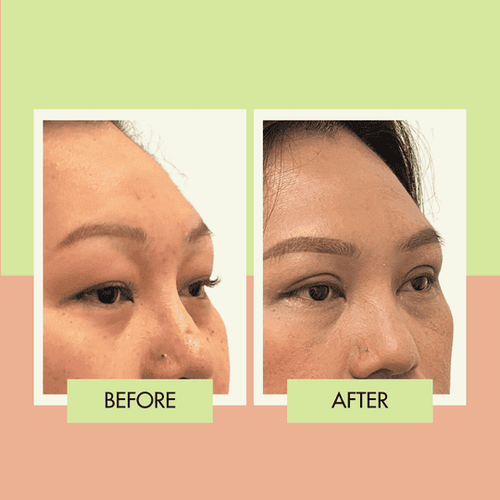
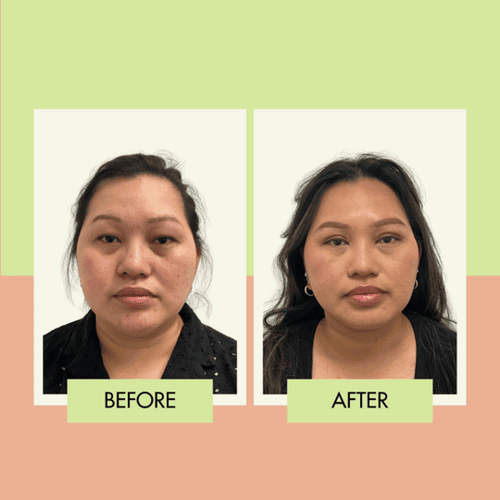
Individual results vary. Photos are shared with patient consent. Eyelid anatomy, technique, crease height, tissue thickness, asymmetry, ptosis, swelling, scarring, and healing all affect the final result.

The procedure is precise. The experience should still feel manageable.
Patients often arrive focused on the millimeters of the crease and worried about how different they may look afterward. A good consultation should make the plan understandable before surgery: what crease is being created, why that height fits the anatomy, which technique is being used, what the early swelling will look like, and when the result can realistically be judged.
The crease looks too high before it looks right.
Early swelling makes the new fold look higher, deeper, and more obvious than the mature result. That is expected. Recovery differs between incisional and suture techniques, and the eyelids continue changing long after most patients are comfortable returning to normal daily life.
Swelling is most obvious
The eyelids can look uneven, high, tight, and bruised. Cold compresses, head elevation, prescribed eye or incision care, and rest are commonly emphasized.
Social recovery improves
Many patients return to work or routine activities during this period. Incisional cases can remain visibly swollen even though the overall appearance is improving.
The crease starts looking softer
Swelling continues to fall and the fold begins to look less surgical. Small differences between the eyes may continue changing during this stage.
The mature crease becomes clearer
Incisional creases can take several months to fully settle. Scar color, depth, symmetry, and the relationship between the crease and surrounding tissue continue to refine.
For additional preparation and recovery guidance, read 5 things to know before double eyelid surgery and our eyelid surgery recovery guide.
Incisional scars mature, and crease durability varies by technique.
Incisional double eyelid surgery creates a scar along the planned crease. It is expected to be more visible early and gradually soften and fade as the eyelid heals. The non-incisional approach avoids a full crease-length incision but still involves small access points for suture placement.
Neither technique should be marketed as an absolute lifetime guarantee. Incisional creases are generally considered more durable, while suture-created creases can loosen or become less defined in some patients. Aging, skin changes, brow position, tissue changes, and previous surgery can also alter the appearance over time.
Revision is possible, but it is usually more complex than primary surgery.
Patients may seek revision because a previous crease is asymmetric, too high, too low, too deep, incomplete, multiple, unstable, or no longer matches their preference. Others have scar-related concerns, residual fullness, hollowing, or an eyelid-opening problem that was not recognized during the first operation.
Revision planning depends heavily on what tissue remains, where the original attachments were created, the condition of the scar, eyelid function, and how long the eyelid has had to heal. Early postoperative asymmetry should not automatically be labeled a failed result while significant swelling is still present.
Revision surgery should begin with diagnosis, not simply recreating the same crease a second time. The surgeon needs to understand why the first result looks the way it does before deciding how it can be improved.
Crease creation, aging eyelid surgery, and under-eye surgery are different procedures.
Patients often use “blepharoplasty” to mean several different operations. Matching the concern to the correct anatomy is more important than the procedure name.
Double eyelid surgery
Creates or defines an upper-eyelid crease. It is most often associated with Asian eyelid anatomy but should be customized to the individual eye.
Upper blepharoplasty
Primarily treats redundant upper-eyelid skin and age-related hooding. See our upper eyelid surgery page.
Lower blepharoplasty
Addresses under-eye bags, lower-lid fat, selected skin laxity, and related lower-eyelid concerns. See our lower eyelid surgery page.
If you are not sure which category fits your concern, our guide to choosing the right eyelid surgery compares upper, lower, and double eyelid procedures.
Double eyelid surgery with consultation, surgery, and follow-up connected to one plan.
Adonis Plastic Surgery is a QUAD A-accredited outpatient surgical facility at 2557 Pacific Coast Highway, Torrance, CA 90505. Consultation, crease planning, surgery-day care, and postoperative follow-up are coordinated through the Torrance practice.
We serve patients throughout Torrance, Redondo Beach, Palos Verdes, Rolling Hills Estates, Lomita, Harbor City, San Pedro, Gardena, Carson, Manhattan Beach, El Segundo, Long Beach, and the greater South Bay. For eyelid surgery, postoperative planning includes swelling, incision or suture care, work and social timing, eye comfort, contact-lens use, exercise, and follow-up.
Double eyelid surgery cost in Torrance and Los Angeles.
Pricing depends on whether the procedure is incisional or non-incisional, whether excess skin or fat needs to be addressed, whether ptosis or another eyelid concern is being treated at the same time, anesthesia, facility requirements, and whether the operation is primary or revision surgery.
Double Eyelid Surgery at Adonis
$4,500 – $7,500This is the current published Adonis range for double eyelid surgery. Your final itemized quote depends on anatomy, technique, complexity, anesthesia, facility requirements, and whether another eyelid procedure is included.
Financing available
Qualified patients may use available payment-plan options for eligible cosmetic surgical costs. Approval, interest, eligibility, and repayment terms are determined by the financing provider.
VIEW PAYMENT PLANSWhen comparing quotes, make sure you are comparing the same procedure. A primary suture-method double eyelid procedure, an incisional case with tissue removal, ptosis correction, and revision Asian blepharoplasty can involve very different surgical plans.
Common questions about Asian blepharoplasty.
What is double eyelid surgery?
Double eyelid surgery creates or defines a visible supratarsal crease in the upper eyelid. It is commonly called Asian blepharoplasty or eyelid crease surgery and can be performed using incisional or non-incisional techniques.
Which surgeons perform double eyelid surgery at Adonis?
Double eyelid surgery at Adonis is performed by board-certified plastic surgeons Dr. Shana S. Kalaria and Dr. Joshua Y. Jacobson. Dr. Kalaria medically reviewed this page.
What is a monolid?
Monolid is a common term for an upper eyelid without a clearly visible crease. It is a normal anatomical variation. Double eyelid surgery is elective and is performed when a patient personally wants a visible or more defined fold.
Is double eyelid surgery the same as upper blepharoplasty?
No. Double eyelid surgery is primarily designed to create or define a crease. Standard upper blepharoplasty primarily removes redundant skin and addresses age-related upper-lid hooding. In some patients, the goals overlap and tissue removal may be incorporated into crease surgery.
What is Asian blepharoplasty?
Asian blepharoplasty is another term commonly used for double eyelid surgery because crease creation is especially common among patients with East and Southeast Asian eyelid anatomy. The procedure should still be designed around the individual rather than assuming all Asian eyelids have the same structure.
Does double eyelid surgery change my ethnicity or identity?
The procedure changes the upper-eyelid crease. A thoughtful plan is designed around your existing facial features, eye shape, epicanthal fold, tissue thickness, and preferred degree of definition rather than trying to make every patient fit one eyelid template.
What is the difference between incisional and non-incisional double eyelid surgery?
Non-incisional surgery uses buried sutures through small access points to create the crease and is often considered for thinner lids with little skin excess. Incisional surgery uses an incision along the planned crease, giving the surgeon more direct control and allowing selected skin or tissue to be addressed when needed.
Which double eyelid technique lasts longer?
Incisional crease formation is generally considered more durable because the surgeon creates the fold through direct tissue fixation. Suture-created creases can also be long-lasting but may loosen or become less visible over time in some patients.
What is a tapered double eyelid crease?
A tapered crease narrows toward the inner corner of the eye and may blend into the epicanthal fold. The amount of taper and visible lid show should be planned around the patient's anatomy and preferred appearance.
What is a parallel double eyelid crease?
A parallel crease remains visibly separated from the upper lash line as it approaches the inner eyelid. Whether a parallel, tapered, or intermediate pattern looks natural depends on the anatomy of the eyelid and inner corner.
Can I choose exactly how high my eyelid crease will be?
Your preference matters, but crease height should also be compatible with the eyelid's anatomy. A surgeon can simulate different positions and explain which heights are likely to look natural and behave predictably rather than treating crease height as an arbitrary number.
Can double eyelid surgery make my eyes look bigger?
A more visible upper-eyelid crease can make the eyes appear more open or defined, but crease surgery does not literally enlarge the eyeball. The visual effect depends on crease height, ptosis, epicanthal fold, brow position, and the patient's existing eye shape.
Can double eyelid surgery correct puffy upper lids?
Selected excess fat or other tissue may be addressed during an incisional procedure when it contributes to fullness or interferes with crease formation. Tissue removal should be conservative because too much fat removal can create hollowing or an unnatural crease.
Can double eyelid surgery correct uneven eyelid creases?
It can improve crease asymmetry, but the surgeon should first determine why the two sides differ. Existing ptosis, brow position, skin, fat, previous surgery, or natural skeletal asymmetry can all affect how the folds appear.
Can double eyelid surgery fix ptosis?
Not by itself. Ptosis refers to a low eyelid margin related to the eyelid-opening mechanism. Some patients need separate ptosis correction at the same time as crease surgery, while others need crease surgery alone.
What is epicanthoplasty, and do I need it with double eyelid surgery?
Epicanthoplasty modifies the tissue at the inner corner of the eye and is a separate procedure from double eyelid crease creation. It is not automatically necessary. Whether it has any role depends on the inner-corner anatomy and the specific aesthetic goal.
How long does double eyelid surgery take?
Many procedures take approximately one to two hours. Surgical time varies with technique, tissue removal, symmetry correction, ptosis treatment, revision complexity, anesthesia, and whether another eyelid procedure is performed.
How long is double eyelid surgery recovery?
Many patients return to work or routine social activity in roughly one to two weeks, although incisional eyelids can remain visibly swollen longer. The crease continues to soften and settle for several weeks to months.
Why does my crease look too high right after surgery?
Swelling temporarily increases crease height and makes the fold look deeper and more obvious. The eyelids generally soften as swelling resolves, so the first several days are not an accurate representation of the mature crease.
Will double eyelid surgery leave scars?
Incisional surgery creates a scar along the planned crease. It is more visible early and typically becomes less noticeable as it matures. Non-incisional methods avoid a full crease-length incision but still use small access points for suture placement.
Are double eyelid surgery results permanent?
Results can be long-lasting, particularly with incisional techniques, but no technique should be described as an absolute lifetime guarantee. Suture-created creases can loosen, and aging, tissue changes, brow position, or future surgery can alter the eyelid over time.
Can double eyelid surgery be revised?
Yes. Revision may be considered for asymmetry, a crease that is too high or low, multiple folds, a weak or disappearing crease, scarring, hollowing, or other concerns. Revision is often more complex because the surgeon must work with scar tissue and altered anatomy from the first operation.
What are the risks of double eyelid surgery?
Potential risks include bleeding, infection, swelling, dry-eye symptoms, visible or unfavorable scarring, asymmetry, crease loss, multiple creases, a crease that is too high or low, overcorrection or undercorrection, hollowing, changes in sensation, ptosis-related concerns, difficulty with eyelid closure, and the possibility of revision surgery.[5]
How much does double eyelid surgery cost in Torrance or Los Angeles?
Adonis currently publishes a $4,500 to $7,500 range for double eyelid surgery. Final pricing depends on technique, anatomy, complexity, anesthesia, facility requirements, primary versus revision surgery, and whether another eyelid procedure is included.
Do you see Asian blepharoplasty patients from outside Torrance?
Yes. Adonis Plastic Surgery is in Torrance and serves patients from Redondo Beach, Palos Verdes, Manhattan Beach, El Segundo, Long Beach, San Pedro, Gardena, Carson, Lomita, and throughout the South Bay and Greater Los Angeles.
Clinical information reviewed against peer-reviewed medical literature.
This page was medically reviewed by Shana S. Kalaria, MD, MBA, an American Board of Plastic Surgery-certified plastic surgeon, on September 13, 2026. These sources support general educational information about Asian eyelid anatomy, crease formation, incisional and non-incisional methods, ptosis assessment, complications, and revision considerations. They do not replace individualized medical advice.
2026 review · PubMed
Anatomy and crease-formation review · PubMed
Technique and patient selection · PubMed
Anatomy, ptosis and brow considerations · PubMed
Complications review · PubMed
Incisional technique review · PubMed
Pitfalls and crease-height considerations · PubMed
Technique and outcome principles · PubMed
Joshua Y. Jacobson, MD · ASPS profile
Create a crease that looks like it was always meant to be there.
Meet with one of our board-certified plastic surgeons to review your existing crease, eyelid thickness, epicanthal fold, brow and eyelid position, symmetry, crease-height preferences, technique options, recovery, and whether ptosis or another eyelid concern also needs attention. You will receive a clear recommendation before deciding whether to move forward.