
Breast Lift
(Mastopexy)
A breast lift reshapes and raises breasts affected by ptosis after pregnancy, breastfeeding, weight change, aging, or genetics. Mastopexy removes excess skin, reshapes the breast envelope, and repositions the nipple-areola complex when needed. It changes breast position and shape without automatically adding an implant.[1]

What a breast lift actually changes.
A breast lift is primarily a shape-and-position operation. It removes stretched skin, tightens the breast envelope, reshapes existing tissue, and moves the nipple-areola complex to a more appropriate position on the breast mound when needed.
The procedure is designed for breast ptosis, the medical term for breast sagging. It can improve a flattened or elongated breast shape, nipples that sit below the breast crease or point downward, enlarged areolas, and visible asymmetry in breast position.
Adonis performs mastopexy at our Torrance surgical facility for patients throughout Redondo Beach, Palos Verdes, Manhattan Beach, El Segundo, Long Beach, San Pedro, and the greater South Bay and Los Angeles area.
Who tends to benefit most from a breast lift?
The need for a lift is determined more by breast position, skin quality, health, smoking status, and the patient’s goals than by age alone.[2] The surgeon looks at where the nipple sits relative to the breast crease, the amount of stretched skin, breast volume, tissue quality, asymmetry, and whether you want to maintain, increase, or decrease breast size.
After pregnancy or breastfeeding
Pregnancy can stretch the skin and change the position and distribution of breast tissue even after volume partially returns.
After significant weight loss
Loss of breast volume may leave a loose skin envelope and lower nipple position that cannot be corrected by exercise or additional weight loss.
Age-related or genetic sagging
Some patients develop breast ptosis because of skin elasticity, breast weight, gravity, or hereditary breast shape regardless of pregnancy history.
Periareolar, lollipop, and anchor lifts are chosen by anatomy.
A shorter scar is not automatically a better lift. Incision pattern is chosen according to breast size and shape, areola position, degree of sagging, skin quality, elasticity, and the amount of excess skin.[3]
Periareolar lift
An incision around the areola may be appropriate for selected patients with mild sagging or areola enlargement. It provides less skin-removal capability than vertical or anchor techniques.
Vertical or “lollipop” lift
The incision circles the areola and continues vertically to the breast crease. This pattern allows more meaningful reshaping and skin removal without a full horizontal crease incision.
Anchor / inverted-T lift
The incision runs around the areola, vertically to the breast crease, and along part of the fold. It is commonly used when sagging and excess skin are more substantial.
A lift changes position. An implant changes volume.
If you are satisfied with your breast volume and primarily want the breasts higher and firmer, a breast lift can be performed without implants. Adonis also has a dedicated guide explaining breast lift surgery without implants.
If you also want more upper-pole fullness or an increase in breast volume, your surgeon may recommend combining mastopexy with breast augmentation. This combined operation is often called augmentation-mastopexy.
Trying to correct significant sagging with an oversized implant can create a larger breast without solving the underlying position problem. The lift and the volume decision should be planned separately, then combined only when both are needed.
How mastopexy is planned and performed.
Breast lift surgery may be performed with intravenous sedation or general anesthesia, depending on the patient, procedure, and surgical plan.[3] After the incision pattern is made, the surgeon reshapes and repositions the breast tissue, removes excess skin, and moves the nipple and areola when necessary while preserving their blood supply and connection to the breast.
The areola may be reduced if it has stretched, and the breast envelope is closed around the newly shaped tissue. When augmentation or reduction is part of the plan, those steps are coordinated with the lift so volume, nipple position, skin tension, and symmetry are balanced together.
Consultation and measurements
Your surgeon evaluates breast position, nipple height, breast crease, areola size, asymmetry, skin quality, volume, health history, and whether you want more or less breast volume.
Incision and tissue reshaping
The selected incision pattern provides access to remove excess skin and reshape the breast tissue into a more supported mound.
Nipple and areola repositioning
The nipple-areola complex is repositioned when needed, and an enlarged areola may be reduced to better match the new breast shape.
Closure and support
Incisions are closed in layers, dressings and a support bra are applied as indicated, and you go home with detailed recovery instructions and scheduled follow-up.
Not sure whether you need a lift alone, implants, a breast reduction, or a combination? The answer depends on breast position, volume, skin, and the shape you want to keep or create.
REQUEST MY CONSULTATIONBreast lift before and after.
When comparing mastopexy results, look beyond whether the breast is simply higher. Evaluate nipple position, breast shape, symmetry, lower-pole contour, areola size, scar placement, and whether the breast looks balanced on the patient's torso.
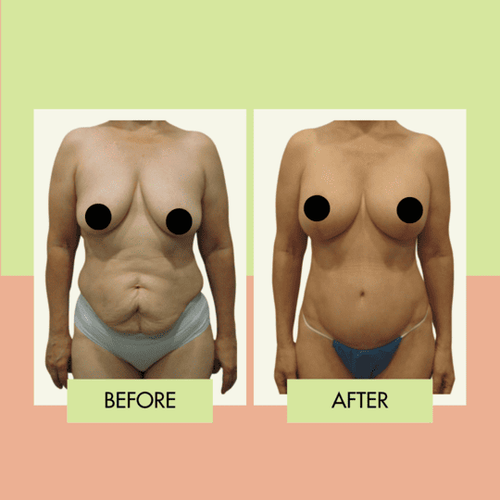
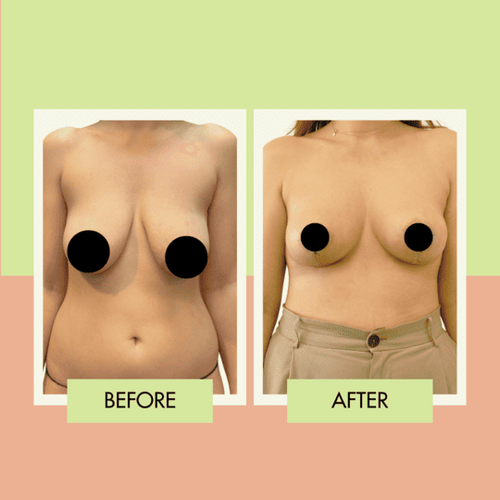
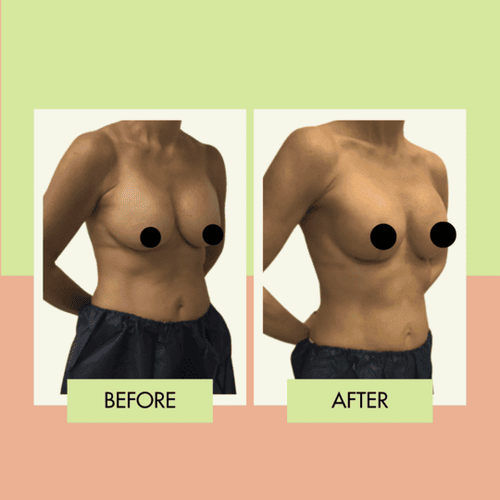
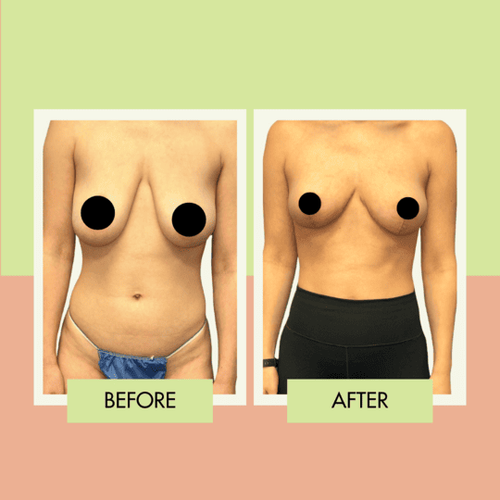
Individual results vary. Photos are shared with patient consent. Starting breast shape, skin quality, incision pattern, tissue volume, healing, and any implant or reduction procedure affect the final result.
For a more detailed way to evaluate galleries, read our guide to comparing breast lift results.
A meaningful lift requires accepting an incision.
Mastopexy scars are permanent. Their visibility usually changes as they mature. Depending on the technique, scars may sit around the areola, extend vertically to the breast crease, and, with an anchor pattern, continue horizontally along the fold.[5]
Scar quality is influenced by incision tension, genetics, skin type, nicotine exposure, wound healing, sun exposure, and postoperative care. The more important question is whether the incision pattern allows the surgeon to reshape the breast safely and predictably.
The shortest scar is not automatically the best operation. A limited incision that cannot adequately treat the amount of skin excess can compromise shape or longevity.
Recovery is usually manageable, but the incisions need protection.
Swelling, soreness, bruising, temporary numbness, and tightness can occur during early healing. Dressings or a support bra may be used, and activity progresses according to the surgeon’s instructions.[4] A surgical or support bra is often used, and activities that place tension on the breast incisions remain restricted even after you feel comfortable doing more.
Swelling and soreness
Rest, short walks, incision care, and prescribed support are the priorities. Avoid lifting and movements that create pulling across the chest.
Light work often resumes
Many patients return to sedentary work within about a week, depending on comfort, incision healing, and whether an implant or reduction was performed.
Activity expands gradually
Exercise, heavier lifting, and upper-body activity return only after your surgeon confirms that the incisions and deeper tissues are ready.
Shape and scars mature
Swelling settles and breast position softens into a more mature shape. Incision lines continue flattening and fading for many months.
A breast lift is durable, but breasts continue to change.
Mastopexy does not stop aging, gravity, pregnancy-related changes, or future weight fluctuation. The removed skin does not return, but remaining skin and breast tissue can stretch over time. Maintaining a reasonably stable weight helps preserve the result.
Pregnancy after breast lift
Pregnancy is possible after mastopexy, but future breast enlargement and deflation can stretch the skin again. Patients planning pregnancy soon often choose to postpone cosmetic breast lifting.
Breastfeeding
Some patients can breastfeed after breast lift surgery, but future lactation cannot be guaranteed. Technique, existing anatomy, nipple repositioning, and individual milk production all matter.
Mammograms and screening
Routine breast imaging can continue after mastopexy. Tell the imaging facility about prior breast surgery and continue screening according to your health care provider's recommendations.
Lift, augmentation, reduction, or a combination?
Many patients know the shape they want but are not sure which operation creates it. Breast position, breast volume, tissue weight, and skin excess determine whether one procedure is enough.
Breast lift alone
Best suited to patients who want higher, reshaped breasts while keeping approximately the volume they already have.
Breast lift + augmentation
Combines repositioning with increased volume or upper-pole fullness. Explore breast augmentation at Adonis.
Breast reduction with lift
Patients who want the breasts both higher and smaller may need tissue removal in addition to lifting. See our breast reduction page.
When breast and abdominal changes are being addressed together after pregnancy or weight change, a mommy makeover may combine breast surgery with tummy tuck or liposuction when appropriate.
Breast lift surgery with consultation, surgery, and follow-up connected to one plan.
Adonis Plastic Surgery is a QUAD A-accredited outpatient surgical facility at 2557 Pacific Coast Highway, Torrance, CA 90505. Consultation, operative planning, surgery-day care, and postoperative follow-up are coordinated through the Torrance practice.
We serve patients throughout Torrance, Redondo Beach, Palos Verdes, Rolling Hills Estates, Lomita, Harbor City, San Pedro, Gardena, Carson, Manhattan Beach, El Segundo, Long Beach, and the greater South Bay. Practical planning includes help at home, driving, work demands, lifting restrictions, incision care, bras or garments, exercise, and future breast screening.
Breast lift cost in Torrance and Los Angeles.
Pricing depends on the amount of sagging and skin removal, incision pattern, surgical complexity, breast asymmetry, anesthesia, and whether implants or reduction are part of the operation. The final quote is based on the procedure actually recommended for your anatomy.
Breast Lift (Mastopexy)
$10,500 – $16,000This is the current published Adonis range for breast lift surgery. Final pricing depends on the mastopexy pattern, complexity, anesthesia, facility requirements, and individual surgical plan.
Augmentation + Lift
$12,500 – $17,000For patients who need both repositioning and added volume, breast implants may be combined with mastopexy. Implant type, pocket planning, lift complexity, and asymmetry affect the final quote.
When comparing breast lift quotes, confirm whether the price is for mastopexy alone or includes implants, implant costs, anesthesia, facility fees, postoperative garments, and follow-up care.
Common questions about mastopexy.
What is a breast lift?
A breast lift, or mastopexy, removes excess skin and reshapes breast tissue to raise and support breasts that have sagged. The nipple and areola may also be repositioned, and an enlarged areola can be reduced when appropriate.
Which surgeons perform breast lift surgery at Adonis?
Breast lift surgery at Adonis is performed by board-certified plastic surgeons Dr. Shana S. Kalaria and Dr. Joshua Y. Jacobson. Dr. Kalaria medically reviewed this page.
What is breast ptosis?
Breast ptosis is the medical term for sagging or descent of the breast. Surgeons assess nipple position relative to the breast crease, skin excess, gland position, and breast shape to determine the degree of ptosis and appropriate lift technique.
Can I get a breast lift without implants?
Yes. A breast lift can be performed without implants when the goal is to raise and reshape the breasts while maintaining approximately the patient's existing volume. An implant is considered when additional volume or upper-pole fullness is also desired.
Does a breast lift make breasts bigger?
A breast lift primarily changes breast position and shape rather than substantially increasing size. Some patients perceive the breasts differently after reshaping, but a meaningful increase in volume generally requires an implant or fat transfer.
Can a breast lift make breasts smaller?
Mastopexy removes skin and may involve limited tissue reshaping, but it is not primarily a reduction operation. If significant reduction in breast size and weight is desired, a breast reduction is usually the more appropriate procedure.
How do I know if I need a breast lift or breast implants?
If the primary issue is sagging, low nipple position, or stretched skin, a lift addresses the position problem. If breast position is acceptable but volume is insufficient, augmentation may be enough. Patients with both sagging and volume loss may need augmentation-mastopexy.
What is augmentation-mastopexy?
Augmentation-mastopexy combines a breast lift with breast implants. The lift raises and reshapes the breast while the implant adds selected volume and projection. Both procedures are planned together so skin tension, nipple position, implant size, and breast shape remain balanced.
What is the difference between a lollipop lift and an anchor lift?
A lollipop lift uses an incision around the areola plus a vertical incision to the breast crease. An anchor lift adds a horizontal incision along the breast fold. The anchor pattern allows more skin removal and reshaping when ptosis is more significant.
Will a breast lift reduce the size of my areolas?
It can. If the areola has enlarged or stretched, the surgeon can reduce its diameter as part of the mastopexy and reposition it to fit the new breast shape.
Will I have scars after a breast lift?
Yes. All mastopexy techniques create permanent scars. The pattern depends on the amount of lifting and skin removal needed. Scars usually fade and soften over time, but they do not disappear completely.
How long does breast lift surgery take?
A breast lift commonly takes about two to three hours. Operative time may be longer when implants, breast reduction, substantial asymmetry correction, or another procedure is performed at the same time.
How long is breast lift recovery?
Many patients return to light or desk-based work in approximately five to seven days. Swelling and soreness continue beyond that point, and heavier lifting and strenuous exercise are restricted longer while the incisions and deeper tissues heal.
When can I exercise after a breast lift?
Walking usually begins early, but vigorous exercise and heavy upper-body activity are restricted during incision healing. Many patients gradually resume broader activity over four to six weeks, but your surgeon's clearance takes priority over a generic timeline.
Can I breastfeed after a breast lift?
Some patients are able to breastfeed after mastopexy, but future breastfeeding cannot be guaranteed. Existing anatomy, the surgical technique, changes around the nipple and areola, and individual milk production can all affect lactation.
Can I have a breast lift before pregnancy?
Pregnancy after breast lift is possible, but pregnancy and breastfeeding can enlarge and then deflate the breasts again, potentially stretching the skin and changing the result. Patients planning pregnancy soon often choose to postpone elective mastopexy.
Can I still have mammograms after a breast lift?
Yes. Routine breast imaging can continue after mastopexy. Inform the imaging center that you have had breast surgery and follow the screening recommendations provided by your health care team.
Will nipple sensation change after a breast lift?
Temporary changes in nipple or breast sensation can occur after mastopexy, and permanent changes are possible. The likelihood depends on the extent of surgery, anatomy, and individual healing.
How long do breast lift results last?
Results are long-lasting, but breasts continue to age. Gravity, skin elasticity, pregnancy, weight changes, breast size, and genetics can gradually affect breast position again. Maintaining a stable weight helps preserve the result.
What are the risks of breast lift surgery?
Potential risks include bleeding, infection, fluid accumulation, poor wound healing, unfavorable scars, breast asymmetry, changes in nipple or breast sensation, contour irregularity, fat necrosis, partial or total nipple-areola loss, anesthesia complications, blood clots, and possible revision surgery.[5]
How much does a breast lift cost in Torrance or Los Angeles?
Adonis currently publishes a $10,500 to $16,000 range for breast lift surgery. Augmentation with lift is currently published at $12,500 to $17,000. Final pricing depends on the exact procedure, implants if used, surgical complexity, anesthesia, facility requirements, and individualized plan.
Can a breast lift be part of a mommy makeover?
Yes. Mastopexy may be combined with breast augmentation, tummy tuck, liposuction, or other selected procedures as part of a mommy makeover when the surgeon determines the total operative plan is appropriate.
Do you see breast lift patients from outside Torrance?
Yes. Adonis Plastic Surgery is in Torrance and serves patients from Redondo Beach, Palos Verdes, Manhattan Beach, El Segundo, Long Beach, San Pedro, Gardena, Carson, Lomita, and throughout the South Bay and Greater Los Angeles.
Clinical information reviewed against independent medical sources.
This page was medically reviewed by Shana S. Kalaria, MD, MBA, an American Board of Plastic Surgery-certified plastic surgeon, on September 13, 2026. These references support general educational information about candidacy, incision patterns, technique, recovery, risks, and long-term expectations. They do not replace individualized medical advice.
American Society of Plastic Surgeons
American Society of Plastic Surgeons
American Society of Plastic Surgeons
American Society of Plastic Surgeons
American Society of Plastic Surgeons
PubMed / U.S. National Library of Medicine
PubMed / U.S. National Library of Medicine
PubMed / U.S. National Library of Medicine
Joshua Y. Jacobson, MD · ASPS profile
Decide what you want to change: position, volume, or both.
Meet with one of our board-certified plastic surgeons to review breast position, nipple height, skin quality, volume, asymmetry, scar patterns, and whether mastopexy alone or a combination with augmentation or reduction best matches your goals. You will receive a clear surgical recommendation and detailed quote before deciding whether to move forward.