

Male Breast Reduction
(Gynecomastia Surgery)
Gynecomastia surgery reduces excess glandular breast tissue, chest fat, and, when necessary, loose skin to create a flatter and more defined male chest. The key is determining what is actually creating the fullness because gland tissue, fat, puffy nipples, and excess skin do not require the same surgical approach.

What gynecomastia is and what surgery can correct.
Gynecomastia is enlargement of the male breast and may involve glandular breast tissue, localized fat, excess skin, or a combination. It can affect one side or both sides and can occur at different ages.
When persistent tissue does not improve with appropriate weight management or when glandular tissue is the dominant problem, surgery can directly remove the tissue that exercise cannot target. The surgeon's job is not simply to make the chest smaller. It is to create a smooth transition across the pectoral border, nipple-areola complex, and surrounding chest.
Adonis performs gynecomastia surgery at our Torrance surgical facility for patients throughout Redondo Beach, Long Beach, Palos Verdes, Manhattan Beach, El Segundo, San Pedro, and the greater South Bay and Los Angeles area.
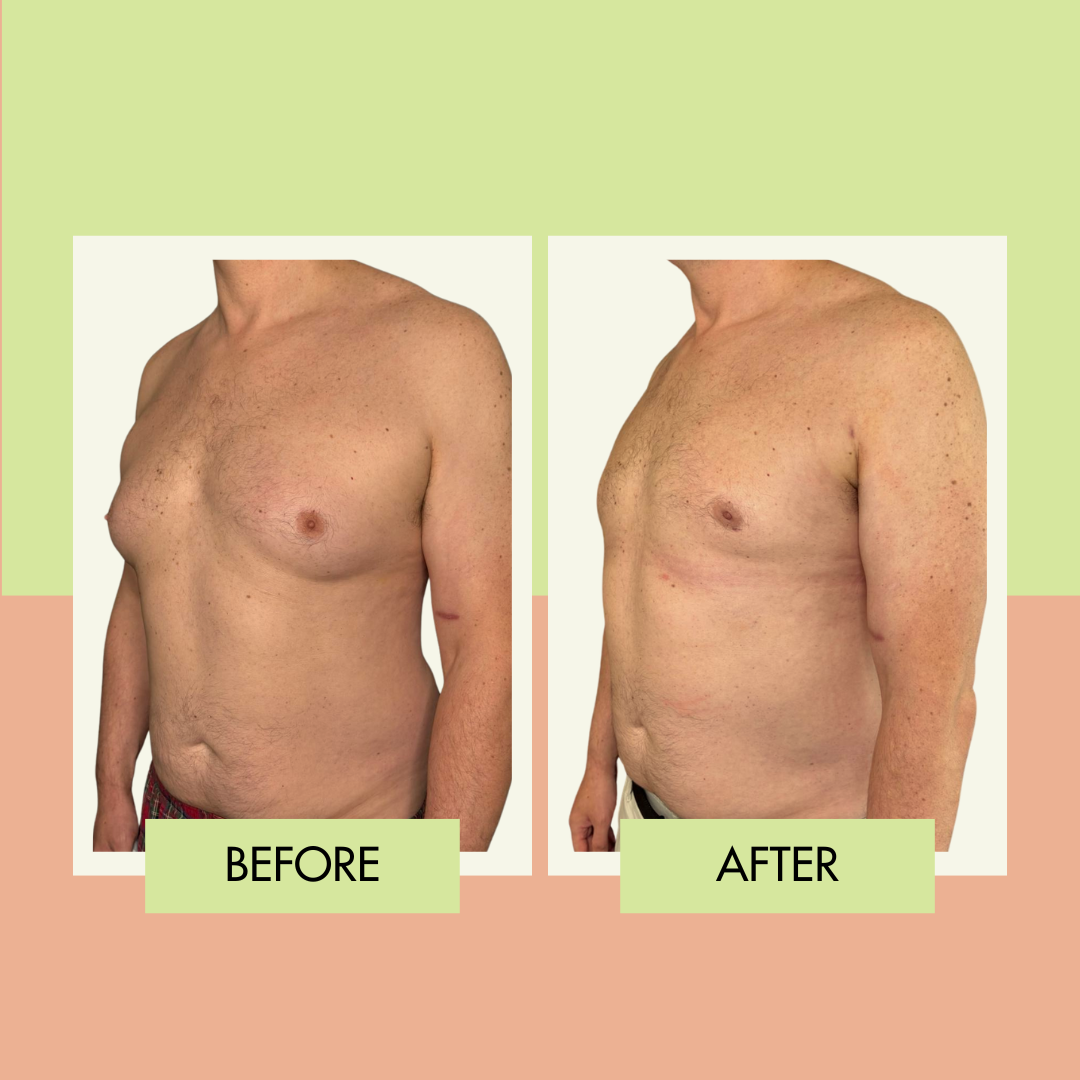
Gland, fat, puffy nipples, and loose skin are different problems.
One of the most important parts of the consultation is identifying which tissue is creating the chest fullness. The appearance alone does not always tell you whether liposuction will be enough.
Glandular gynecomastia
Firm glandular tissue commonly sits beneath or around the nipple-areola complex. When gland is the main cause of projection, direct excision is often necessary because liposuction cannot reliably remove dense glandular tissue.
Pseudogynecomastia / chest fat
Some male chest fullness is primarily fatty tissue rather than enlarged breast gland. In selected patients with good skin elasticity, liposuction may provide most of the required correction.
Mixed tissue and loose skin
Many patients have both fat and gland. After major weight loss or with more advanced chest laxity, excess skin may also need to be removed rather than relying on fat and gland reduction alone.
Sometimes the problem is concentrated directly beneath the areola.
A puffy or projected nipple-areola complex can be caused by glandular tissue sitting directly beneath it. A patient may be lean and have little chest fat yet still have visible projection through shirts because the gland pushes the areola forward.
In that situation, simply losing more weight or performing more chest exercise may not change the projection. The surgeon evaluates whether gland excision, limited liposuction, or a combination will create the smoothest transition from the areola into the surrounding chest.
The goal is not to hollow out the chest. Over-removal beneath the nipple can create a crater or tethered appearance, so tissue reduction and contour blending have to be planned together.
Persistent male breast enlargement can have more than one cause.
Gynecomastia may be associated with hormonal changes, heredity, weight changes, certain medications or substances, and other health factors. A surgical consultation is not a substitute for medical evaluation when the history or examination suggests that an underlying cause should be investigated first.
Who tends to be a good candidate for male breast reduction?
The best candidates are generally healthy, at a reasonably stable weight, have persistent chest fullness that is unlikely to resolve through additional lifestyle change alone, and understand that the surgical technique depends on whether the issue is fat, gland, skin, or a combination.
Persistent gland or chest fullness
The chest remains enlarged despite appropriate weight management, exercise, or time, and examination confirms tissue that surgery can address.
Stable weight and good health
A stable weight helps the surgeon distinguish persistent gynecomastia from changing chest fat and provides a more predictable long-term contour.
Realistic contour goals
The goal is a flatter, proportionate chest, not a guaranteed bodybuilder contour or perfect left-right symmetry. Existing muscle, ribs, skin and chest-wall anatomy remain part of the result.
Liposuction, gland excision, and skin removal each have a role.
Male breast reduction is not one operation performed identically on every chest. The technique is selected according to the tissue present and the amount of skin that can contract after volume is removed.
Liposuction
When excess fatty tissue is a meaningful part of the chest fullness, liposuction can reduce volume and feather the contour into the surrounding chest. Learn more about liposuction at Adonis.
Direct gland excision
Dense glandular tissue is removed through an incision selected for the anatomy, commonly near the edge of the areola. Excision is particularly important when gland is responsible for nipple or areolar projection.
Skin excision / chest lift
More advanced gynecomastia or major weight loss can leave skin that will not contract adequately. In those cases, a larger skin-removal pattern or nipple repositioning may be necessary, with a different scar tradeoff.
How gynecomastia surgery is planned and performed.
Gynecomastia surgery is usually performed as an outpatient procedure. Anesthesia is selected according to the amount of tissue removal, the technique being used, and the patient's surgical plan.
The surgeon may first reduce fatty tissue with liposuction, excise gland directly, or perform both. If the skin envelope is loose enough that it cannot redrape over the smaller chest, skin removal or nipple-areola repositioning may also be part of the plan.
Chest evaluation
Your surgeon assesses gland, fat, skin elasticity, nipple position, chest-wall shape, asymmetry, prior weight changes, medication history, and the contour you want.
Fat reduction when needed
Liposuction may be used to reduce fatty tissue and blend the chest into the pectoral border and surrounding torso.
Gland excision and contouring
Dense glandular tissue is removed when present, with attention to leaving a smooth layer beneath the nipple-areola complex rather than creating a visible depression.
Compression and follow-up
Dressings and a compression garment are typically applied, and drains may be used in selected cases. You leave with written aftercare instructions and scheduled postoperative follow-up.
Not sure whether your chest fullness is glandular gynecomastia, fat, loose skin, or a combination? That distinction is exactly what should be determined before choosing the operation.
REQUEST MY CONSULTATIONGynecomastia before and after.
When comparing male breast reduction results, look at the chest from more than one angle. The transition from the nipple to the surrounding chest, pectoral border, symmetry, skin contraction, and avoidance of an over-resected or cratered appearance all matter.

Individual results vary. Photos are shared with patient consent. Starting anatomy, gland and fat volume, skin elasticity, tissue removal, scars, healing and weight stability affect the final result.
Scar length depends on how much tissue and skin must be corrected.
Liposuction-only cases can often be treated through small access incisions. Gland excision commonly requires an incision near the areola, while larger skin-removal procedures require longer incisions and create more visible scar patterns.
All surgical scars are permanent, even though they generally become less noticeable as they mature. The tradeoff between scar length and chest correction should be discussed before surgery, particularly after major weight loss or when the nipple needs repositioning.
Trying to force a severe case through an incision designed for a mild case can compromise contour. The appropriate incision is the one that allows the required tissue correction while protecting blood supply and creating the best realistic chest shape.
Compression matters, and chest workouts need to wait.
Swelling, bruising, soreness, firmness, and temporary nipple or chest numbness can occur after male breast reduction. A compression garment is commonly used to support the new contour while swelling decreases and the skin begins adapting to the smaller chest volume.
Swelling and compression
Rest, short walks, prescribed compression, incision care, and medication instructions are the focus. Avoid lifting and strenuous upper-body movement.
Desk work often resumes
Many patients can return to sedentary work within about a week, depending on soreness, swelling, drains if used, and the extent of excision.
Activity expands gradually
Cardio and resistance training return in stages. Heavy chest exercise, pressing and strenuous upper-body workouts should wait for surgeon clearance.
The contour keeps refining
Residual swelling and firmness continue to settle. Scars and the nipple-areola contour mature over a much longer period than the initial return to work.
Can gynecomastia come back after surgery?
The tissue removed during surgery does not simply regenerate to its original size, but the chest can change again. Significant weight gain can enlarge remaining fat cells, and hormonal changes, medications, anabolic steroids, or other contributing factors can affect breast tissue over time.
Maintain a stable weight
Weight stability helps preserve the contour and prevents remaining chest fat from enlarging enough to obscure the surgical result.
Review medications and substances
If a medication, hormone, supplement, anabolic steroid, or other substance may have contributed to gynecomastia, discuss it with the appropriate medical professional rather than stopping prescribed treatment on your own.
Allow enough time to heal
Early firmness, swelling and asymmetry can mimic residual gynecomastia. The chest should not be judged as a final result during the first few postoperative weeks.
Gynecomastia surgery cost in Torrance and Los Angeles.
Pricing depends on whether the chest requires liposuction, gland excision, skin removal, nipple repositioning, or a combination. More advanced cases require a different operative plan than a small localized gland beneath the areola.
Male Breast Reduction at Adonis
$7,000 – $12,500This is the current published Adonis range for gynecomastia surgery. Your final itemized quote depends on gland and fat volume, skin excess, surgical technique, anesthesia, facility requirements, and the individualized plan.
Financing available
Qualified patients may use available payment-plan options for eligible surgical costs. Approval, interest, repayment terms, and eligibility are determined by the financing provider.
VIEW PAYMENT PLANSWhen comparing male breast reduction quotes, confirm whether the plan includes liposuction, direct gland excision, skin removal, anesthesia, facility fees, compression garments, and postoperative care. Two patients described as having “gynecomastia” may require very different operations.
Common questions about male breast reduction.
What is gynecomastia?
Gynecomastia is enlargement of the male breast and may involve glandular breast tissue, localized fat, excess skin, or a combination. It can affect one breast or both breasts and can occur at different ages.
What is the difference between gynecomastia and chest fat?
True gynecomastia commonly includes enlarged glandular tissue, while pseudogynecomastia refers primarily to fatty chest enlargement. Many patients have both. Examination helps determine whether liposuction, gland excision, or a combination is appropriate.
Can losing weight get rid of gynecomastia?
Weight loss can reduce fatty chest volume but cannot reliably eliminate persistent glandular tissue. If the chest remains enlarged at a stable, healthy weight, the remaining fullness may require direct surgical treatment.
Can exercise or push-ups get rid of gynecomastia?
Exercise can build the pectoral muscles and reduce overall body fat, but it does not directly remove glandular breast tissue. In some men, stronger chest muscles can actually make persistent gland projection more noticeable.
What causes puffy nipples in men?
Puffy nipples can be caused by glandular tissue beneath the areola, surrounding fat, skin laxity, or a combination. A lean patient can still have a projected areola if gland is the dominant problem.
How is glandular gynecomastia removed?
Dense gland is generally removed through surgical excision, often through an incision near the areola. The surgeon may combine gland removal with liposuction so the central chest blends smoothly with the surrounding tissue.
Can gynecomastia be treated with liposuction alone?
Sometimes. Liposuction may be sufficient when the chest fullness is primarily fatty tissue and skin elasticity is good. Dense glandular tissue usually requires excision, and loose skin may require a larger skin-removal procedure.
Will I have a crater after gynecomastia gland removal?
A depressed or cratered contour can occur if too much tissue is removed directly beneath the nipple-areola complex or if the surrounding chest is not blended appropriately. Surgical planning aims to reduce projection while maintaining a smooth chest contour.
What scars does gynecomastia surgery leave?
Scar pattern depends on technique. Liposuction uses small access incisions, gland excision often uses an incision along part of the areolar border, and cases requiring major skin removal create longer scars. All surgical scars are permanent even though they usually become less noticeable over time.
How long does gynecomastia surgery take?
Many procedures take approximately one to two hours, but operative time can be longer when substantial gland removal, skin excision, nipple repositioning, or more extensive chest contouring is required.
How long is gynecomastia recovery?
Many patients return to desk-based work in about a week. Swelling, firmness and bruising last longer, and strenuous exercise or heavy chest training is restricted for several weeks while deeper tissues heal.
How long do I wear compression after gynecomastia surgery?
Compression schedules vary by technique and surgeon. A compression garment is commonly worn during the early recovery period to support the chest and control swelling. Follow the schedule given by your surgical team rather than a generic online timeline.
When can I work out after gynecomastia surgery?
Walking starts early, while strenuous exercise returns gradually. Heavy chest workouts, pressing movements and other upper-body resistance training are commonly restricted for several weeks and should resume only after surgeon clearance.
Can gynecomastia come back after surgery?
The removed tissue does not simply regenerate to its original size, but significant weight gain, hormonal changes, medications, anabolic steroids, and other contributing factors can change the chest again. Maintaining a stable weight and addressing known contributing factors helps protect the result.
Can anabolic steroids cause gynecomastia?
They can be associated with gynecomastia. If hormones, anabolic steroids, supplements, or other substances may be contributing to breast enlargement, discuss this honestly during evaluation so the cause and recurrence risk can be considered.
Does gynecomastia surgery remove loose chest skin?
Not automatically. Mild skin may contract after volume reduction, but significant excess skin after major weight loss or more advanced gynecomastia may require direct skin excision and sometimes nipple repositioning.
Is gynecomastia surgery permanent?
Results can be long-lasting when weight remains stable and contributing factors do not recur. Aging, weight gain, hormonal changes, medications or substances can alter the chest over time, so no cosmetic result should be described as immune to future change.
Is gynecomastia surgery covered by insurance?
Most health plans treat male breast reduction as cosmetic, but policies vary and some plans may define limited circumstances in which coverage can be considered. Patients who want to explore benefits should review their individual policy directly with their insurer.
What are the risks of gynecomastia surgery?
Potential risks include bleeding, infection, hematoma or fluid collection, contour irregularity, asymmetry, changes in nipple or chest sensation, unfavorable scars, delayed wound healing, nipple inversion or skin compromise, persistent pain, anesthesia complications, and the possibility of revision surgery.
How much does gynecomastia surgery cost in Torrance or Los Angeles?
Adonis currently publishes a $7,000 to $12,500 range for male breast reduction. Final pricing depends on whether the procedure requires liposuction, gland excision, skin removal, nipple repositioning, anesthesia, facility requirements, and the individualized surgical plan.
Do you see gynecomastia patients from Long Beach and outside Torrance?
Yes. Adonis Plastic Surgery is in Torrance and serves patients from Long Beach, Redondo Beach, Palos Verdes, Manhattan Beach, El Segundo, San Pedro, Gardena, Carson, Lomita, and throughout the South Bay and Greater Los Angeles.
Find out what is actually creating the fullness in your chest.
Meet with a board-certified plastic surgeon to review glandular tissue, chest fat, skin elasticity, nipple and areola position, asymmetry, scars, recovery, and the contour you want. You will receive a clear recommendation on whether liposuction, gland excision, skin removal, or a combination is appropriate before deciding whether to move forward.