

The Heart-Healthy Benefits of Lipo 360: Exploring the Intersection of Cosmetic Surgery and Cardiovascular Health
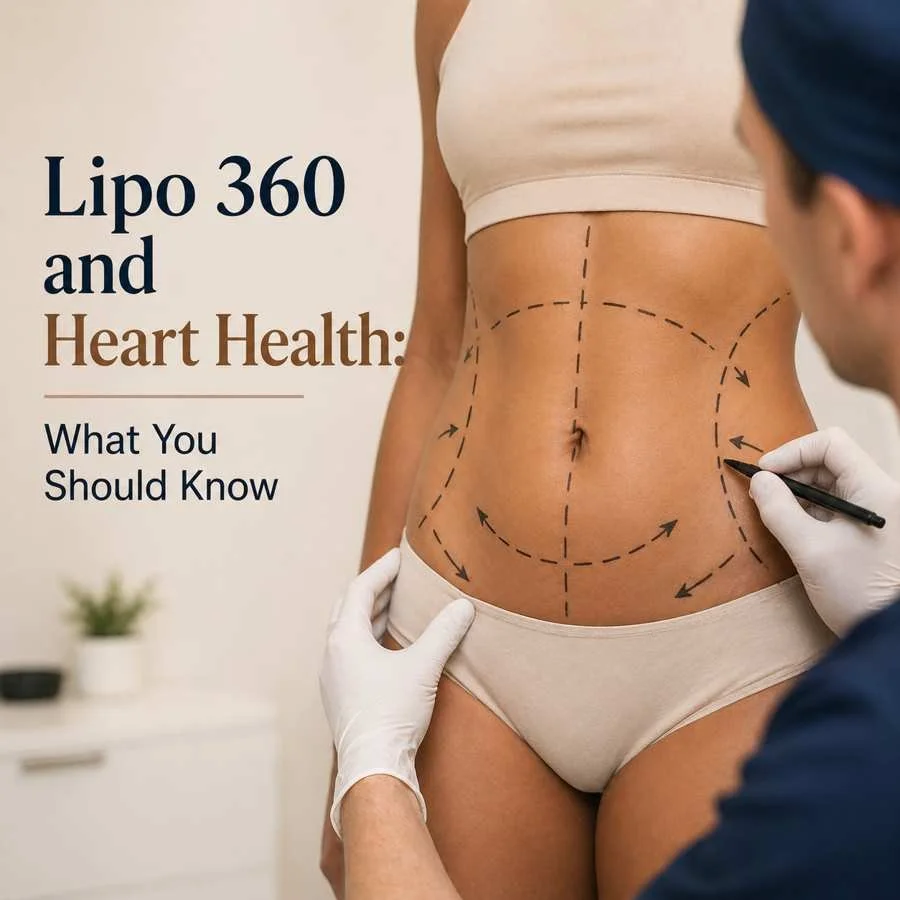
The Question Worth Asking Before You Dismiss This Topic
Most people who look into Lipo 360 are thinking about one thing: how they look. The midsection, the waist, the flanks, the way clothes fit. That is a completely legitimate reason to consider the procedure, and it is the reason the vast majority of patients book a consultation.
But there is a secondary question that comes up less often and deserves a more serious answer than it usually gets: does removing a significant volume of fat from the body have any meaningful effect on health, beyond the mirror? Specifically, does it affect cardiovascular risk?
The honest answer is nuanced. Lipo 360 is not a heart health treatment and should never be positioned as one. But the relationship between body fat distribution, metabolic function, and cardiovascular risk is well established in the medical literature, and understanding where liposuction fits into that picture is worth doing properly.
Subcutaneous Fat vs. Visceral Fat: Why the Distinction Matters
Not all body fat carries the same health implications. This is the most important scientific point in any honest conversation about liposuction and cardiovascular health, and it is where most discussions fall short.
The fat that liposuction removes, including Lipo 360, is subcutaneous fat. This is the fat that sits between the skin and the muscle wall. It is the fat you can pinch. It is the fat responsible for the softness around the waist, the fullness of the flanks, the lack of definition in the midsection. Removing it changes body contour dramatically and can produce significant reductions in circumferential measurements.
Visceral fat is different. It sits deeper, inside the abdominal cavity, surrounding the organs. It is metabolically active in ways that subcutaneous fat is not. High levels of visceral fat are associated with insulin resistance, elevated triglycerides, reduced HDL cholesterol, increased inflammation, and higher risk of cardiovascular disease. This is the fat that drives the health risks associated with central obesity.
Liposuction does not directly target visceral fat. A surgeon cannot remove it with a cannula. This distinction matters because it sets realistic expectations about what Lipo 360 can and cannot do from a health standpoint.
Research published in the New England Journal of Medicine examined the metabolic effects of large-volume liposuction and found that while the procedure produced significant reductions in subcutaneous fat, it did not result in corresponding improvements in insulin sensitivity, blood pressure, or cardiovascular risk markers in the short term. That finding is important context for any claim about liposuction as a metabolic intervention.
Where the Cardiovascular Connection Does Have Merit
The picture is not entirely one-directional. There are legitimate mechanisms through which Lipo 360 may contribute to better cardiovascular health over time, even if they are indirect.
Body Composition and Motivation
Patients who undergo Lipo 360 and are satisfied with their results consistently report higher motivation to maintain those results through diet and physical activity. This behavioral shift is not cosmetic. Sustained increases in physical activity and improvements in diet directly reduce visceral fat accumulation, improve lipid profiles, lower resting blood pressure, and reduce cardiovascular risk over time.
The surgery does not create this outcome automatically. But it can function as a catalyst for the lifestyle changes that do produce measurable health benefits, particularly in patients who had previously struggled to maintain motivation for those changes.
Reduction in Overall Fat Mass
In patients with higher overall body fat, reducing subcutaneous fat volume through Lipo 360 can shift the body's fat distribution ratio. While visceral fat is not directly removed, some research suggests that reductions in total fat mass can secondarily influence visceral fat levels when combined with maintained physical activity post-procedure.
Inflammatory Markers
Subcutaneous fat, particularly in the abdominal region, does contribute to systemic inflammation, though at lower levels than visceral fat. Large-volume fat removal has been associated in some studies with modest reductions in inflammatory markers such as C-reactive protein, which is one of the indicators used to assess cardiovascular risk. The clinical significance of this effect in the context of liposuction specifically remains an area of ongoing research.
What Lipo 360 Actually Is, and What It Is Not
Lipo 360 is a circumferential body contouring procedure. It addresses the abdomen, waist, flanks, and lower back in a single session, producing a more uniform reshaping of the entire midsection rather than targeting isolated pockets. The result is a contour change that diet and exercise alone often cannot achieve, particularly in patients whose fat distribution is genetically determined.
It is not a weight loss procedure. Ideal candidates are already at or near a stable, healthy weight. It is not a substitute for cardiovascular fitness, and it does not replace the metabolic benefits of sustained aerobic exercise and a well-managed diet. Patients who approach it as a finishing tool rather than a starting point get the best outcomes, both aesthetically and in terms of long-term maintenance.
For patients who are also considering broader body contouring, Lipo 360 is frequently combined with a tummy tuck when skin laxity is a factor, or incorporated into a mommy makeover plan when multiple areas are being addressed after pregnancy. The right combination depends entirely on each patient's anatomy and goals.
The Psychological Dimension Is Real
There is a well-documented bidirectional relationship between mental health and cardiovascular health. Chronic stress, depression, and poor body image are each independently associated with elevated cardiovascular risk through mechanisms including elevated cortisol, inflammation, and disrupted sleep.
Patients who report significant improvement in body image and self-confidence following Lipo 360 are not experiencing a trivial outcome. Improvements in psychological wellbeing have downstream effects on sleep quality, stress hormone levels, and the likelihood of engaging in health-promoting behaviors. This is not a primary argument for the procedure, but it is a legitimate part of the complete picture.
The American Heart Association has published guidance on the connection between mental health and heart health, recognizing psychological wellbeing as a genuine factor in cardiovascular risk management.
Who Is a Good Candidate for Lipo 360
The best candidates for Lipo 360 are adults who are at a stable weight, in good general health, and looking to address fat deposits in the midsection that have proven resistant to diet and exercise. This includes patients who have lost significant weight and are dealing with stubborn residual fat, as well as patients whose body shape is largely determined by genetics rather than lifestyle factors.
Candidates should have realistic expectations. Lipo 360 will produce a more contoured, defined midsection. It will not produce a fundamentally different body if the habits that surround the procedure do not support the result. The patients who are most satisfied long-term are those who use the procedure as part of a broader commitment to how they take care of themselves, not as a standalone fix.
Patients with significant cardiovascular conditions, bleeding disorders, or other systemic health concerns require thorough medical clearance before any surgical procedure. The consultation process at Adonis Plastic Surgery includes a complete health review to ensure every patient is a safe and appropriate candidate before any plan is made.
The Adonis Approach to Body Contouring
At Adonis Plastic Surgery in Torrance, Lipo 360 is performed by board-certified plastic surgeons within a clinical structure built for consistency. The evaluation process is thorough, the surgical plan is individualized to each patient's anatomy, and the post-operative care follows a structured protocol from day one through full recovery.
Patients are not managing their recovery by trying to reach a single provider. The clinic handles follow-up, answers questions, and manages the process at every stage. That level of access and accountability is what the Adonis model is built on.
For patients who want to explore their options and understand what Lipo 360 could realistically achieve for them, the right next step is a consultation. Learn more about Lipo 360 at Adonis Plastic Surgery, or review financing and payment plan options if cost is part of the planning conversation.
Ready to Take the Next Step?
Understanding the procedure is the first step. Understanding whether it is right for your specific anatomy and goals requires a real conversation.
Adonis Plastic Surgery serves patients throughout the South Bay, including Torrance, Redondo Beach, Palos Verdes, El Segundo, Manhattan Beach, Long Beach, Carson, Gardena, and surrounding communities.